

Abstract:
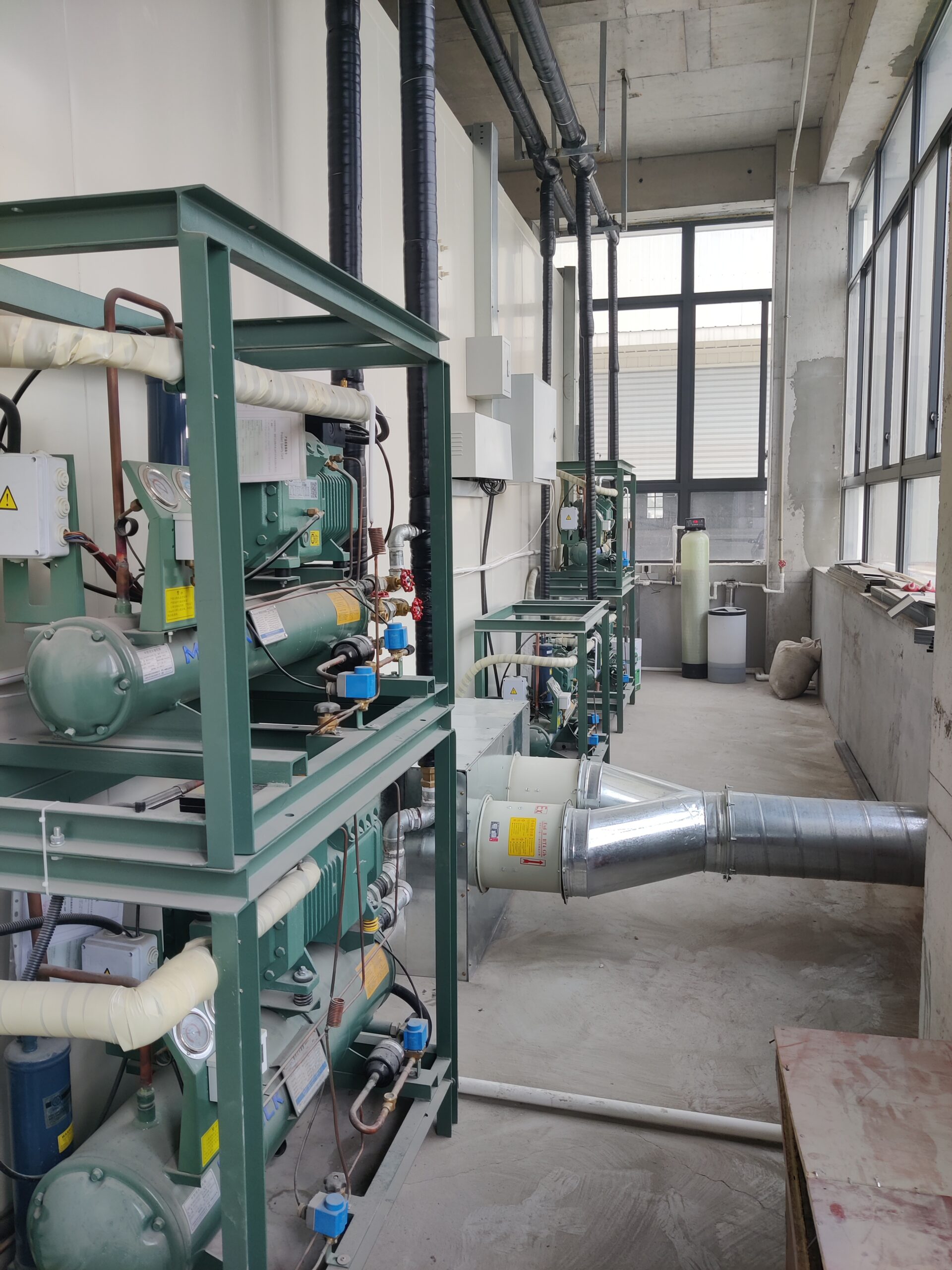
The air conditioning performance testing laboratory is based on the refrigerant enthalpy difference method (which refers to the thermal energy difference at different spatial locations) as the fundamental measurement means for evaporators and condensers in refrigerant cooling systems. It can accurately determine technical data such as the cooling capacity of heat exchangers. The laboratory consists of one environmental chamber, an air handling unit (air-cooled air conditioner, electric heater, humidifier), a compression condensing unit, airflow measuring devices, a control measurement system, a refrigerant testing platform, and a computer system. It is designed for comprehensive performance testing of air conditioning systems in data centers, meeting the requirements for detecting and experimenting with technical data such as cooling capacity and power consumption of corresponding air conditioning units. The technology for constructing an air conditioning performance testing laboratory is characterized by its complex construction content, high technical content, involvement of multiple technical fields, and significant construction difficulty, making it a comprehensive engineering project.
Keywords: Enthalpy difference method; ABB frequency converter; air handling unit; air conditioning and refrigeration systems.
1. The overview of the air conditioning performance testing laboratory.
The air conditioning performance testing laboratory is centered around computer automated measurement and electrical control systems. It utilizes LabVIEW 8.5 graphical programming software combined with general-purpose computers and functional hardware. Users can operate this computer through a user-friendly graphical interface, enabling the computer to perform process control, data computation, and processing tasks not only in traditional programmable instruments but also to replace certain hardware functions of traditional instruments with powerful software. This allows for monitoring and manipulation of the production process via a display terminal, where the keyboard and screen replace the large control panel with numerous switches and buttons.
Additionally, the operation of the laboratory’s system equipment is controlled by a computer system, a touchscreen, and a programmable logic controller (PLC). Commands are issued from a higher-level computer, ensuring accurate starting and stopping of the equipment and long-term reliable operation. The fault display function on the screen is intuitive and easy to understand, facilitating system maintenance and repair. Data collection during test runs is completed by a 6.5-digit high-precision data acquisition system, which can transmit data in real-time to the upper-level computer for processing, and the computer displays and outputs printed test reports and data storage.
2. Principles of Working Condition Testing in Air Conditioning Performance Testing Laboratory
The air conditioning performance testing laboratory operates based on the principles of automated measurement and control systems. It employs LabVIEW 8.5 graphical programming software, integrating general-purpose computers with functional hardware. Users can operate the computer through a user-friendly graphical interface, enabling it to perform process control, data computation, and processing tasks similar to traditional programmable instruments. Furthermore, powerful software can replace certain hardware functions of traditional instruments, allowing for monitoring and manipulation of the production process via a display terminal. The keyboard and screen replace the large control panel with numerous switches and buttons. Additionally, the operation of the laboratory’s system equipment is controlled by a computer system, touchscreen, and programmable logic controller (PLC). Commands are issued from a higher-level computer, ensuring accurate starting and stopping of the equipment and long-term reliable operation. The screen’s fault display function is intuitive and easy to understand, facilitating system maintenance and repair. Data collection during test runs is completed by a 6.5-digit high-precision data acquisition system, which can transmit data in real-time to the upper-level computer for processing. The computer displays and outputs printed test reports and stores data.
3. Analysis and Explanation of Constructing Testing Environment for Air Conditioning Laboratory
3.1 Purpose of Testing Environment Control
The purpose of testing environment control is to maintain stable experimental conditions, which includes the following aspects:
- Testing Environment Control: Controlling the temperature and humidity of the room to simulate the thermal environment during normal operation of the air conditioner.Cooling and Dehumidification: The room temperature and humidity are controlled using a refrigeration unit (air-cooled air conditioner), which includes:Circulation Fan Protection: Overcurrent protection, high and low-pressure protection, condensate flow switch protection, a 3-minute shutdown time protection, and overcurrent protection.
- Heating Control: The room temperature is increased using adjustable heating elements controlled by SSR (Solid State Relay), with:
Circulation Fan Protection: Over-temperature protection. - Humidity Control: The room is humidified using an adjustable humidification tank with spray, controlled by SSR, which includes:Circulation Fan Protection: Low water protection.
- Site: Enclosure area: 15m x 7m.
- Equipment Area: 15m x 4m.
- Control Room: 7m x 3m.
- Total Area (excluding walkways): 23m x 11m, with a net height of the factory building greater than 6.5m.
- Power Supply: Three-phase five-wire, 380V, 50Hz, 90kVA (with additional independent signal grounding).
- Drainage: The ground should have a “grid” type open drainage ditch surrounding an area of 12m x 4.5m.
- Supply: 1 T/h of clean tap water to the construction site.
- Ductwork: The ductwork between the test unit and the static pressure box will be provided by the client.
Additional Control Measures
Testing Condition Control: The air pressure of the airflow testing chamber is adjusted using a manometer to control the variable frequency drive, simulating the airflow environment during normal operation of the air conditioner.
Supplementing with Return Air Dampers: Adjust the cooling and dehumidification ratio of the refrigeration unit.
3.2 Case Study of Air Conditioning Laboratory Construction
3.2.1 Software Platform of the Air Conditioning Laboratory
The software testing platform for this air conditioning laboratory is developed based on “LABVIEW 8.5 Professional Edition,” combined with an Access database to create a 32-bit standard Windows software.
Software Operating Environment Requirements:
3.2.2 Directory Structure of the Software SystemHardware Requirements: CPU above 1 GHz; RAM 1 GB; a good graphics card; at least 5 GB of free hard disk space; suitable operating systems: Windows XP or Windows
3.2.3 Main Content of Constructing the Air Conditioning Laboratory
The testing items for this air conditioning laboratory include the following performance metrics for unitary air conditioning systems used in the computer and data processing room:
- Nominal Cooling Capacity
- Sensible Cooling Capacity (the cooling capacity when the temperature changes without altering the state of the substance)
- Reheating Capacity
- Humidification Capacity
- Partial Load Performance Testing
Note: This plan does not support testing of heat pump type unitary air conditioners.
4. Installation ConditionsSite: Enclosure area: 15m x 7m.
Equipment Area: 15m x 4m.
Control Room: 7m x 3m.
Total Area (excluding walkways): 23m x 11m, with a net height of the factory building greater than 6.5m.
Power Supply: Three-phase five-wire, 380V, 50Hz, 90kVA (with additional independent signal grounding).
Drainage: The ground should have a “grid” type open drainage ditch surrounding an area of 12m x 4.5m.
Supply: 1 T/h of clean tap water to the construction site.
Ductwork: The ductwork between the test unit and the static pressure box will be provided by the client.5. Summary of Construction Technology for Air Conditioning Performance Testing Laboratory
In summary, the construction technology of the air conditioning performance testing laboratory is an extremely complex and comprehensive technology. It includes components such as compression and condensation units, airflow measurement devices, control measurement systems, refrigerant testing platforms, and computer control systems. The technology encompasses air conditioning, refrigeration technology, electromechanical integration, PLC electrical automation, variable frequency drives, touchscreen technology, water supply systems, electronic communication technology, computer programming software technology, and PC testing systems.
The construction features complexity in content, high technical content, involvement of multiple technical fields, and significant construction difficulty.
6.Cultivating an Information Technology Team
Personnel is the fundamental element for carrying out all activities. Although informatization is a reform process that transforms manual operations into mechanical ones, people play a crucial role in controlling the informatization system during this process. In other words, the smooth progress of informatization construction and the actual value that the informatization system can deliver are inevitably related to human factors.
In this regard, during the informatization construction of the truck operation system, it is essential to focus on the development of the talent team. Only by having a high-quality team with modern professional skills can the smooth implementation of informatization construction be ensured. During the informatization construction of the truck operation system, it is necessary to adhere to the fundamental principle of being people-oriented, recognizing that people are the main driving force behind informatization construction.
In the development of the informatization team, the key point is to cultivate personnel who have a high enthusiasm for informatization construction and possess the ability to apply informatization technology. This involves developing their own value and enabling them to provide maximum foundational support for the informatization construction of the truck operation system.