

Abstract
With the development of the Internet and artificial intelligence technology, many household appliances have entered the smart era, providing more convenience for daily life. Smart electric ovens help enhance the quality of life. The demand for smart electric ovens is continuously increasing. The release of the “Smart Electric Oven” group standard fills the standard gap for smart electric ovens, providing testing methods and standard references for aspects such as remote interaction, voice control functions, smart linkage functions, reservation functions, intelligent memory recommendation functions, device self-diagnosis functions, third-party application functions, and multi-platform direct connection functions. This is a good attempt at industry standards and national standards.
Keywords
Smart electric oven, intelligent memory, smart recipes, smart linkage
Introduction
Currently, China’s kitchen appliance market is undergoing a smart revolution, and the built-in kitchen appliance market has made significant progress in recent years. The biggest pain point for consumers after purchasing an electric oven is the lack of cooking skills, with 77% of users reporting difficulties in making dishes or experiencing failures. Moreover, users often struggle with setting oven parameters accurately. Chinese oven users have a particular fondness for meat recipes but frequently encounter issues such as dry meat, poor texture, or burnt food. Therefore, designing a smart oven that enhances convenience and allows users to create delicious dishes with a crispy exterior and tender interior has become a pressing challenge.
In recent years, with the development of cloud computing, big data, the Internet of Things, and artificial intelligence technologies, smart home appliances have experienced rapid growth, with market penetration rates increasing quickly, bringing new experiences to users. Important breakthroughs have been made in areas such as computing power, algorithms, and data analysis. The popularization of smart products has collected and accumulated a large amount of user and appliance data. It is particularly urgent to rationally utilize this data to standardize smart electric oven standards, proactively cater to users’ safety and health needs, and provide references for users in choosing smart electric ovens. It also offers guidance for companies in designing smart electric oven products.
In foreign markets, the penetration rate of built-in ovens is no less than 85%, while in China, it is still below 5%, indicating significant room for market development. Consumer shopping concepts have gradually shifted from “basic needs” to “quality needs.” According to McKinsey, by 2025, the upper middle class and above in China will account for 63%, while the middle class will account for 22%. This demographic is the driving force behind the consumption upgrade in China, although there is a relatively long cultivation period. The increasing pursuit of higher material and cultural standards, along with the rapid development and application of Internet of Things technologies, has integrated smart IoT technologies and scenarios into the daily lives of ordinary people, becoming a new trend in the upgrade and iteration of household appliances and kitchen appliances.
Related electric oven manufacturers have also rushed to develop their smart products and quickly bring them to market. However, due to the lack of measurement standards for product safety and intelligence levels, issues of mixed quality and substandard products have emerged, which, over time, will affect the healthy development of the industry and legitimate enterprises.
1 Research History and Current Status of Smart Appliances at Home and Abroad
In 2014, consumer electronics giants Google and Apple tentatively entered the smart home field, attracting public attention to smart living. In January 2014, Google acquired smart device manufacturer Nest Labs to develop smart home technology, and in June, it acquired the emerging home monitoring camera company Dropcam, marking a deeper step into consumer households. In 2014, an American company, June, developed a smart oven product equipped with a CPU processor, camera, thermometer, sensors, and a weight scale. The camera inside the June oven can record the entire cooking process and upload it to the corresponding app. It can also identify what food is placed inside the oven. Additionally, based on the built-in weight scale and thermometer, it can calculate the weight and temperature of the food, setting appropriate cooking time ranges.
In October 2016, Google launched the Google Assistant smart home feature, allowing users to control household appliances like lights and air conditioners through voice commands via Google Home smart speakers and the Google Assistant app. This program can accurately recognize different people’s voices, meaning that each family member can set up their own schedule.
China has actively introduced relevant policies to promote the development of the smart appliance industry. To regulate the smart appliance market, in 2012, the former General Administration of Quality Supervision, Inspection and Quarantine and the National Standardization Administration jointly issued GB/T 28219-2011 “General Technical Specifications for Smart Home Appliances.” The standard clearly defines concepts such as smart appliances, smart features, smart technologies, and smart control systems. Haier is a pioneer in China’s smart appliance industry. In 2012, it launched a smart refrigerator connected to the Internet, featuring a sleek design with an integrated LCD touchscreen that can play music, display images, show short videos, and provide various information such as weather and inventory in supermarkets.
In March 2014, at the China Household Appliances Expo, Haier held a U+ Smart Life Experience Sharing Conference, releasing the U+ Smart Life Operating System. This system is based on micro-communities, recording consumers’ product usage habits and establishing health big data for consumers to create healthier lifestyles, constructing five “smart ecological circles” for smart water use, smart diet, smart entertainment, smart communities, and smart air. At the AWE exhibition in 2017, Haier upgraded these five “smart ecological circles” to seven ecological circles aimed at developing smart home systems.
Currently, the entire smart appliance industry is largely fragmented, with products operating independently and systems unable to collaborate, resulting in poor user experiences in real-world scenarios. Smart appliance products have not yet formed a mature international standard system, nor can they achieve unified coordination through standardization. Although various systems of smart appliance products provide communication interfaces for data transmission, different manufacturers use unique communication protocols, leading to incompatibility between appliances from different brands, ultimately hindering the development of the entire smart appliance industry. The industry generally believes that the challenges facing the coordinated development of smart appliances are not technical issues but rather how to unify standards and protocols.
2 Standards for Smart Electric Ovens
On September 15, 2021, eight companies and testing institutions, including Haier, Stande, Kamonte, Hisense, and Weikai, formed the drafting working group for the “Smart Electric Oven” group standard in Chengde, Hebei, and held the standard initiation meeting and the first standard discussion meeting. The leading company, Qingdao Haier Smart Kitchen Appliances Co., Ltd., provided a detailed explanation of the draft of the group standard, and discussions were held item by item. Representatives from all drafting units attended the first meeting, and the discussions on the standard were thorough. Suggestions and opinions for revisions raised by various units during the meeting were recorded in detail by the secretariat, resulting in the “Minutes of the First Meeting on the Discussion of the ‘Smart Electric Oven’ Standard.” The meeting also assigned tasks for the next steps, with each member unit organizing assessments and preliminary tests of their smart electric oven products according to the draft standard’s requirements for intelligent functions and testing methods.
On November 4, 2021, the working group organized the second standard discussion meeting for the “Smart Electric Oven” group standard via an online meeting. Representatives from all drafting units attended this meeting. The meeting focused on discussing revisions to the standard and sharing and analyzing the compatibility of suggestions for intelligent functions from various units with evaluation data and standard requirements. Based on the minutes of the first discussion meeting, the standard content was restructured and gaps were filled. After thorough discussions, the drafting units proposed additional revisions and modifications to the second discussion draft and reached a consensus to have the leading unit revise it into a draft for soliciting opinions.
On January 18, 2022, the working group sent the revised “Smart Electric Oven” draft for soliciting opinions, based on the minutes of the second discussion meeting, to relevant units and the secretariat of the Smart Appliance Professional Committee of the China Electronic Energy Saving Technology Association, widely soliciting opinions. Based on the draft for soliciting opinions, expert discussions and revisions were conducted, resulting in a submission draft.
In August 2022, the T/DZJN104-2022 “Smart Electric Oven” group standard was released at the 2022 China Kitchen Appliance Smart Technology Seminar. The standard specifies the requirements, testing methods, inspection rules, as well as related requirements for labeling, packaging, transportation, and storage of smart electric ovens. Users can remotely manage the data or programs of smart electric ovens through air interfaces of wireless networks such as local area networks and mobile communications. The network communication module of the smart electric oven should support simultaneous connections to at least two cloud platforms and corresponding remote control terminals for user convenience. The smart electric oven can automatically control temperature and cooking time based on the recipe selected by the user and the quantity of ingredients set. To ensure the safety of the smart electric oven, it should achieve remote control through intelligent technology, possessing remote control safety management functions to ensure safe operation of the oven remotely. The smart electric oven can achieve remote interaction functionality and provide feedback on the execution results of commands to the remote end.
3 Innovation of the Standards
When conducting intelligent testing of the smart electric oven, the laboratory’s ambient temperature should be maintained within the range of 20℃±5℃, and the relative humidity should not exceed 95%. The tested electric oven should be installed and debugged according to the user manual, ensuring a stable and good wireless network environment. This intelligent testing covers aspects such as remote interaction, voice control functions, smart linkage functions, smart recipe functions, reservation functions, self-cleaning functions, intelligent memory recommendation functions, device self-diagnosis functions, third-party application functions, and multi-platform direct connection functions.
3.1 Remote Interaction Testing
Inspect the remote control function of the tested electric oven according to the user manual and manually operate the tested electric oven and the remote end using the following testing methods. When operating the tested electric oven through the remote end, the machine should execute the corresponding function, and the total time for sending, executing, and providing feedback on commands should not exceed 5 seconds. During remote control, the machine should have priority control. Before the user uses remote control for the first time, pairing operations should be conducted on the smart electric oven. Even if the network connection is lost, the machine should still operate normally. Users can use the wireless network to cancel or disconnect the established network connection and application interaction relationship with the smart electric oven through the remote end. When the smart electric oven operates the corresponding function, the remote end’s functional interface should be unified with the machine end, with a success rate of no less than 98%.
3.2 Voice Control Function
The smart electric oven with voice control functionality should be capable of executing corresponding operational functions locally without a network connection or, when connected, executing functions through cloud recognition. The voice recognition rate must meet specified requirements, and the frequency of false awakenings must also meet specified requirements.
3.3 Smart Linkage Function
Once the smart electric oven is powered on, the functions of other linked devices will automatically run. When the electric oven module is turned off, the functions of other devices will automatically stop or delay stopping for a certain period. Modules that improve the cooking results of oven food, kitchen environment, and user operational convenience should be able to interconnect and interact.
3.4 Smart Recipe Function
The smart electric oven can automatically control the mode, temperature field, and duration according to smart recipes. The oven is equipped with built-in sensors that can automatically adjust cooking parameters and execute cooking programs based on smart recipes.
3.5 Reservation Function
The reservation function of the smart electric oven allows for the scheduled start of a specific program. The tested oven will run accordingly, and when the operation ends, the program can automatically shut down. When the oven module is scheduled to shut down a specific program, the tested oven will correspondingly close the program.
3.6 Self-Cleaning Function
The smart electric oven will automatically start or prompt for self-cleaning after running for a specified period. It should also be capable of self-cleaning during operation.
3.7 Intelligent Memory Recommendation Function
The smart electric oven can record and store the parameters of the baking process, including mode, temperature, and duration, after the user completes a baking session. Upon the next startup, it will display recommended baking data based on the machine’s own or cloud-based algorithms, automatically suggesting baking data.
3.8 Self-Diagnosis Function
The smart electric oven with self-diagnosis functionality can perform partial or complete self-checks on its components. Additionally, it can conduct online diagnostics through a service platform, with the user having the option to enable this function. In the event of a malfunction, it can automatically send fault information and user information to the after-sales service department for automatic repair requests, with the user having the option to enable this function. When an alarm occurs, the smart electric oven can take automatic alarm measures. If there is a remote network connection, it should also have the capability to synchronize alarm information to the remote end, prompting the user remotely.
3.9 Multi-Platform Direct Connection Function
The smart electric oven can be authorized for control by third-party application services, allowing the tested third-party application to connect to the device according to the requirements of the smart electric oven or to interface through cloud authorization, providing operational capabilities for the device. Data between multiple platforms should remain synchronized.
3.10 Test Validation
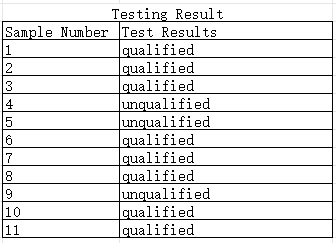
Eleven representative smart electric oven products from 10 manufacturers were selected for the mapping test, and the results are shown in Table 3.
4.Conclusion
User demand for intelligent electric oven products is increasing, and there is an urgent need to develop scientific and effective test methods to guide users and standardize enterprise design. This paper analyzes the development history of intelligent home appliances and the current situation of the industry. It tests the intelligence of intelligent electric oven from several aspects, including remote interaction, voice control function, intelligent linkage function, intelligent recipe function, reservation function, self-cleaning function, intelligent memory recommendation function, self-checkup function, third-party application function and multi-platform direct connection function, which can objectively evaluate the degree of intelligence of the electric oven products; and provides technical support and standards for the objective evaluation of the intelligence of electric oven products. Reference.